

Chinese Chayote Recipe: Healthy Stir-Fried Chayote with Pork Belly!
Chayote or Buddha’s Palm has a hint of squash in its taste. This vegetable is usually stir-fried with other vegetables or proteins. Stir-fried chayote is easy to make and tastes amazing. I wanted to share one of my favorite chayote recipes with you for a long time.
Here is the Chinese chayote recipe that will be ready in less than 20 minutes. It also requires simple ingredients to make. So, you can make it with the least hassle. Find the detailed steps of cooking the recipe along with the relevant information.
Table of Contents
Chinese Chayote Overview
The following chart will give you a quick overview of the recipe, including its serving size, calories, and required time.
| Cuisine: Chinese | Difficulty: Easy | ||
| Total Time: 20 minutes | |||
| Serving | Preparation Time | Cooking Time | Calories |
| 1 person | 10 minutes | 10 minutes | 145 kcal |
Ingredients Needed for Chinese Chayote Recipe
Other than the chayote, meat is the main ingredient of this dish. The full list of ingredients is given below.
Main Ingredients for the Recipe
- Chayote: Use one large chayote
- Pork: About 150g of pork belly, cut into thin strips
- Peanut Oil: 1 tbsp. Using other oil is also fine as long as it doesn’t have a strong flavor.
- Ginger: 1-inch knob of ginger, thinly sliced
- Garlic: 2-3 cloves of garlic, minced
- Scallion: ¼ cup of chopped scallions. Take both green and white parts of scallions
- Chili: 2-3 chilies, shredded. Use Bird’s Eye chilies if you want that distinct flavor.
- Chicken Essence: 1 tsp
Sauces and Seasonings for the Recipe
- Salt: ½ tsp
- Sugar: 1 tsp
- Light Soy Sauce: 1 tsp
- Dark Soy Sauce: 1 tsp
- Oyster Sauce: 1 tbsp
Chinese Chayote Recipe: Step-By-Step Instructions
Both the prep work and the cooking process are easy. Let me show you the exact steps below.
Step 1: Prepare the Chayote

Remove the top and bottom of the chayote first. It will give you a bit of a flat surface. Then, cut the chayote into quarters so that you can remove the core easily.
You Can Also Try Chinese Leftover Pulled Pork Recipe
After removing the core, slice each quarter diagonally. It will give you small and thin slices of chayote. Keep it for later.
Step 2: Fry the Pork Belly
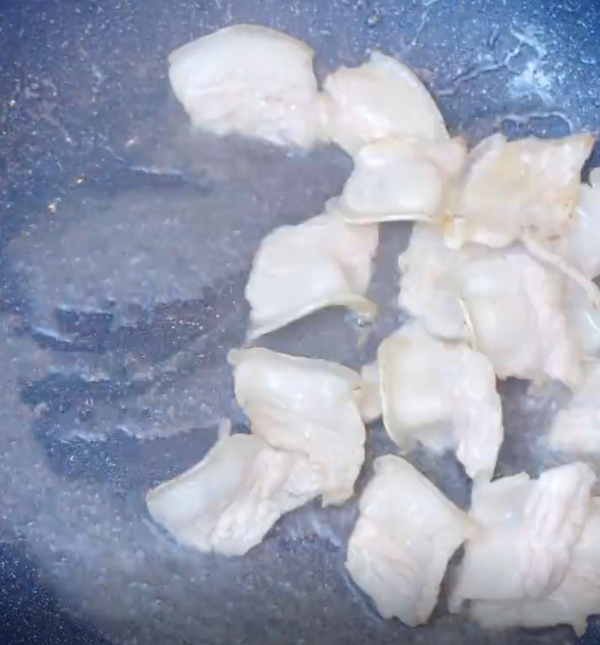
Pour 1 tbsp of peanut oil into a pan and heat it. Add the pork belly strips to the hot pan and stir-fry them. Fry the pork belly until the fat is rendered. You need to use less oil at first as the pork fat will be rendered.
Step 3: Add the Spices and Sauces

Put the ginger, garlic, scallions, and chili into the pan and fry them with the pork belly. Keep the heat on medium so that you don’t burn the spices. After lightly frying the spices, put some light and dark soy sauce together.
You Can Also Try Thin Sliced Pork Cutlet Recipe
They will give the pork belly some color. Continue frying until the pork belly is golden brown.
Step 4: Fry the Chayote Slices

Add the sliced chayote to the pan and stir-fry it. It won’t take too long for the chayote to be cooked.
Step 5: Season the Dish

At this stage, you need to add the sugar, chicken essence, and oyster sauce to the pan. Add the salt at last after checking the sauce. Otherwise, the dish might be too salty. Also, drizzle a bit more dark soy sauce.
Step 6: Garnish and Serve

After frying everything for one more minute, the Chinese chayote is ready to serve. Sprinkle some scallions on top of the chayote dish.
Nutrition Facts of Chinese Chayote
Chayote contains some of the essential nutrients for maintaining a healthy life. You will get the nutritional value of this recipe below.
- Total Carbohydrates: 21g
- Protein: 4g
- Total Fat: 6g
- Saturated Fat: 0.6g
- Polyunsaturated Fat: 2g
- Monounsaturated Fat: 2g
- Total Dietary Fiber: 7g
- Total Sugar: 5g
- Cholesterol: 7mg
- Sodium: 851mg
- Potassium: 661mg
- Calcium: 241mg
- Iron: 2.2mg
- Vitamin A: 93IU
- Vitamin C: 31mg


Chinese Chayote Recipe
Ingredients
Method
- Remove the top and bottom of the chayote first. It will give you a bit of a flat surface. Then, cut the chayote into quarters so that you can remove the core easily.
- After removing the core, slice each quarter diagonally. It will give you small and thin slices of chayote. Keep it for later.
- Pour 1 tbsp of peanut oil into a pan and heat it. Add the pork belly strips to the hot pan and stir-fry them. Fry the pork belly until the fat is rendered. You need to use less oil at first as the pork fat will be rendered.
- Put the ginger, garlic, scallions, and chili into the pan and fry them with the pork belly. Keep the heat on medium so that you don’t burn the spices. After lightly frying the spices, put some light and dark soy sauce together.
- They will give the pork belly some color. Continue frying until the pork belly is golden brown.
- Add the sliced chayote to the pan and stir-fry it. It won’t take too long for the chayote to be cooked.
- At this stage, you need to add the sugar, chicken essence, and oyster sauce to the pan. Add the salt at last after checking the sauce. Otherwise, the dish might be too salty. Also, drizzle a bit more dark soy sauce.
- After frying everything for one more minute, the Chinese chayote is ready to serve. Sprinkle some scallions on top of the chayote dish.
FAQs
If you aren’t familiar with cooking chayote, answers to the following questions will help you further. Check them out.
Q: Can chayote be substituted for other vegetables in Chinese cooking?
It depends on the flavor profile of the vegetable. If you are using a vegetable that has a similar taste and isn’t the main ingredient of a dish, you can substitute chayote for that. For example, you can substitute chayote for zucchini.
Q: What are some popular protein pairings with chayote in Chinese cuisine?
Almost all proteins can be paired with chayote. Traditionally, pork and beef are most commonly cooked with chayote. You can also make chicken, seafood, and fish recipes using chayote.
Q: What are the traditional Chinese seasonings used in chayote dishes?
Dark and light soy sauce are traditionally used in chayote dishes. Other than that, salt, chicken essence, oyster sauce, red chili, Sichuan pepper, chili bean paste, etc. are also used to cook chayote. These seasonings remove the squashy smell of chayote.
Q: Do I need to peel the chayote before cooking it?
Peeling a chayote before cooking it isn’t mandatory. You can peel it if you want. Removing the core is essential as it contains the seeds.
Conclusion
I see this as a confusing dish because you can’t figure out whether to call it a stir-fried chayote recipe or a stir-fried pork belly recipe. Whatever you call it, you will be amazed by the taste of this dish. The freshness of the chayote meets the meaty flavor and the seasonings to deliver an umami flavor.
This Chinese chayote recipe is popular in many regions across the country. You can try its variations by adjusting the ingredients according to your preference. The crunchy bite of chayote with the caramelized pork belly is something you can’t refuse.
